

Our Edge Thinkers’ series continues with a conversation between Ann-Marie Blake, Co-founder of True, and Pippa Goodman, MD of Next Up. They explore how foresight can act as a pressure valve for Chief People Officers under increasing strain.
People deliver strategy. Yet in most organisations, ‘People’ and ‘Strategy’ rarely operate as partners. Where that disconnect persists, today’s operating environment – and the volume of change programmes – has exposed it more than ever.
Adaptive strategy is now the norm – a roadmap in constant flux. Speaking with Next Up, Ann-Marie Blake argues that the consequences for People teams are becoming more onerous – and often overlooked.
People and Culture teams absorb the pressure of uncertainty
As businesses respond to ongoing geopolitical and economic disruption, People and Culture teams are managing the human impact – supporting employees already anxious about the wider world. Edelman’s Trust Barometer 2026 found that 67% of employees globally worry about losing their job as a result of a looming recession – up six percentage points since 2020.
People teams are also on the front line of AI-led transformation helping employees understand what AI might mean for their role, supporting reskilling, workforce strategy and maintaining trust as ways of working fundamentally change. For Chief People Officers, daily firefighting is now the norm leaving little time or headspace for longer‑term thinking.
As Ann-Marie puts it: “Organisations don’t have time to rest. There’s no time to fully adopt one change before the next comes along. It used to be one or two big changes a year. Now, it’s multiple, overlapping changes leading to change fatigue, stress, and resistance.”
Chief People Officers need approaches that help them better balance the demands of today with tomorrow. Strategic foresight is one answer.
Foresight as a practical tool
Foresight is not about predicting tomorrow – it’s about exploring plausible futures and using them to test today’s decisions.
For a People Director, that means asking: “If X or Y happens, does our people plan still make sense? Where do we need to build in flex, for resilience?”
Stress testing strategy brings clarity on the right decisions today. It also creates space to push back. As Ann-Marie argues: “Businesses are very good at adding things onto the stack and less good at taking them off. People need to know which work genuinely drives value and which just happens because it always has.”
Buy-in comes from building together
Collaborative foresight is an untapped opportunity for People and Strategy teams. Bringing employees into strategy-making through immersive workshops and scenario exercises helps make the future tangible, clarifies where they fit and elevates their contribution. In doing so, foresight becomes something people can engage with, rather than something done to them.
This is particularly important given declining levels of employee engagement. Gallup’s State of the Global Workplace 2026 found that global employee engagement has dropped to 20% and that low engagement cost the world economy approximately $10 trillion in lost productivity last year, or 9% of GDP.
The trust imperative
Trust in institutions remains fragile – despite small improvements in this year’s Edelman Trust Barometer. “My employer” is the most trusted institution, but leaders are falling short of employee expectations when it comes to encouraging dialogue across divides in polarised times. This reinforces the growing importance of collaborative foresight.
Listening builds trust
Listening helps leaders understand what employees are already seeing, sensing and questioning, and creates space to explore what those insights might mean for the future.
If you bring people with you and they understand what it is you’re trying to do, they’re more likely to adopt,” says Ann-Marie. “Listening and dialogue are what build that understanding. When employees can see their input reflected in how the organisation is preparing for what comes next, they are far more likely to understand it, trust it and play their part in it.”
What does this look like in practice?
Foresight and scenario planning can seem like a distraction from pressing day-to-day priorities. In practice, a proactive approach to the future sharpens prioritisation today – and starts with small, repeatable shifts:
- Developing the ability to think about the future – including recognising and overcoming natural biases.
- Building scenario thinking into quarterly planning cycles.
- Creating space to challenge which work stays and which no longer adds value.
- Involving employees directly in exploring different potential futures and how to evolve operating models.
Chief People Officers need better tools to navigate the growing complexity of their remit. Today’s fires will always feel more urgent. But without carving out time to anticipate tomorrow – with Strategy and with employees – they lose the agency to shape it. Foresight moves People leaders from reacting to change towards shaping the workforce for what comes next.
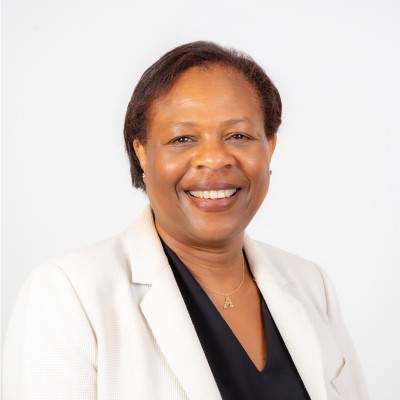
Ann-Marie Blake has over 25 years’ experience in communications where she’s worked both in-house (including HSBC, Barclays, NatWest) and as a consultant spanning a range of disciplines including public relations, marketing, corporate affairs, change and internal communications.
She is a Fellow of the Chartered Institute for Public Relations, Chartered PR Practitioner and former Secretary/Treasurer on the International Executive Board of the IABC (2020 – 2024).
Her impact on the communications world has been recognised with Fellowships of both the Chartered Institute of Public Relations and Centre for Strategic Communications Excellence.
She is a founder Board Member for PRCA Race and Ethnicity Equity Board (REEB) and a recent winner of the 2025 Independent Impact 50 awards which celebrate the UK’s most influential independent practitioners in PR.