
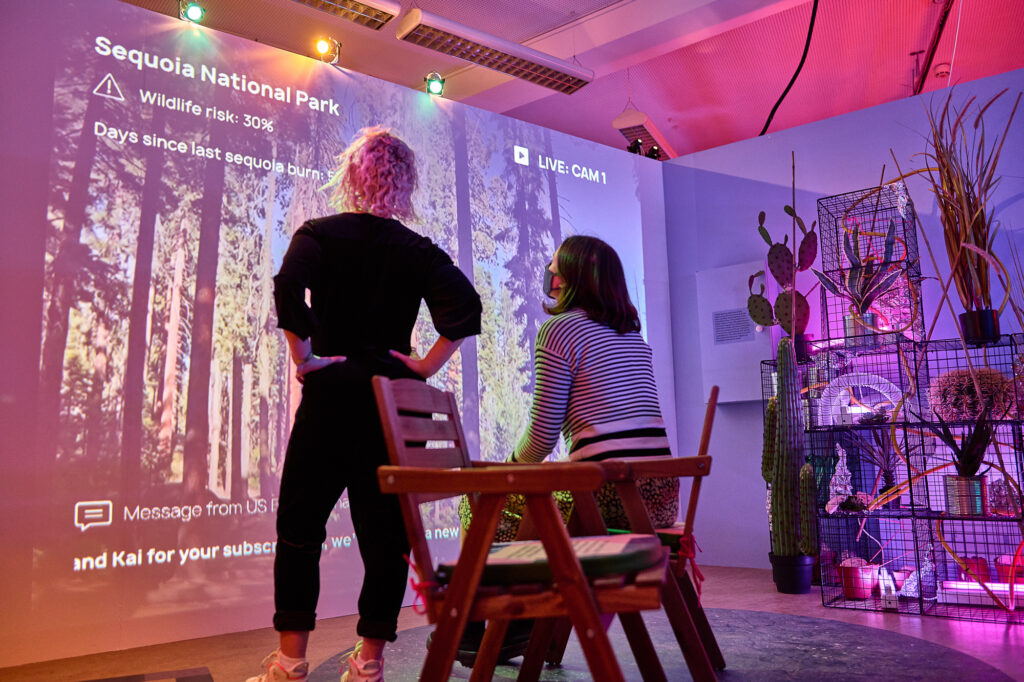
Image: courtesy of The Liminal Space
In a world defined by growing uncertainty, businesses face unprecedented pressure to make sense of long-term change. Seismic shifts are creating a future for every industry that is more volatile, complex, and contested.
To stay ahead and shape a vision for the future, business leaders – across strategy, insight, risk and innovation functions – are responding with horizon scanning, scenario planning, and long-term decision-making frameworks. But something critical has been missing.
Despite foresight investment, many organisations struggle to engage their wider workforce and shape everyday behaviours with insights and vision generated at the top. The result? A strategic disconnect – with costly commercial impacts.
Gallup’s State of the Global Workplace 2025 report found:
- Just 21% of global employees felt engaged at work in 2024 – down from 23%.
- This is costing global businesses $438bn in lost productivity.
The challenge: From vision to collective action
Despite foresight’s growing influence in C-suite’s long-term strategic planning, we consistently see organisations fail to effectively cascade leadership’s central vision through their workforce. This results in:
- Top-down vs. bottom-up disconnect: The C-suite’s strategic vision may engage leadership and drive high-level decision-making – but it is rarely owned and felt by those tasked with delivering change.
- Psychological distance from the future: Employees tend to view long-term goals as abstract or detached, rather than as lived experiences they can influence.
- Limited engagement: Feeling little scope to co-create a shared vision or challenge assumptions, employees do not fully buy into the organisation’s future direction.
This gap matters because strategy is only as good as the culture and people who bring it to life. If employees cannot picture their role in the future world, they will struggle to prepare for it – let alone embrace the transformation, behaviour and mindset shifts needed to make it happen.
The case for Participatory Foresight
Participatory Foresight shifts strategy from being a static document to a shared, felt experience. It brings employees, partners, and stakeholders into the process of exploring, debating, and shaping possible and desired futures.
Done well, it:
- Makes the future tangible: Turning abstract visions into lived, sensory experiences – helping people feel the future and what it means for them.
- Unlocks diverse intelligence: Harnessing employees as a source of ideas, insight and inspiration – not just a passive audience for strategy.
- Overcomes cognitive bias: Breaking through “it won’t happen here” thinking by immersing people in plausible futures.
- Builds organisational resilience: Creating ownership, readiness, and a culture that can pivot when disruption hits.
- Supports inclusivity: Ensuring employees feel safe and energised to influence the future of the organisation.
Simply, Participatory Foresight is not a nice-to-have. In an environment where employee engagement, adaptability and transformation speed are strategic differentiators, it now drives competitive advantage.
Delivering Participatory Foresight
At Next Up, we’ve seen first-hand how powerful this can be when shaped and delivered in partnership with experts. Working with the experience design specialists at The Liminal Space, we help clients translate long-term strategy into immersive, physical experiences that people can walk through, touch, and interact with. This makes the future tangible and real.
At the forefront of Participatory Foresight, The Liminal Space is evolving best practice in collective participation across the civic sphere. Working together allows us to harness best practice public sector methodologies – such as Citizens’ Assemblies and Deliberative Dialogue – to transform foresight practice in the private sector, where these approaches are more nascent.
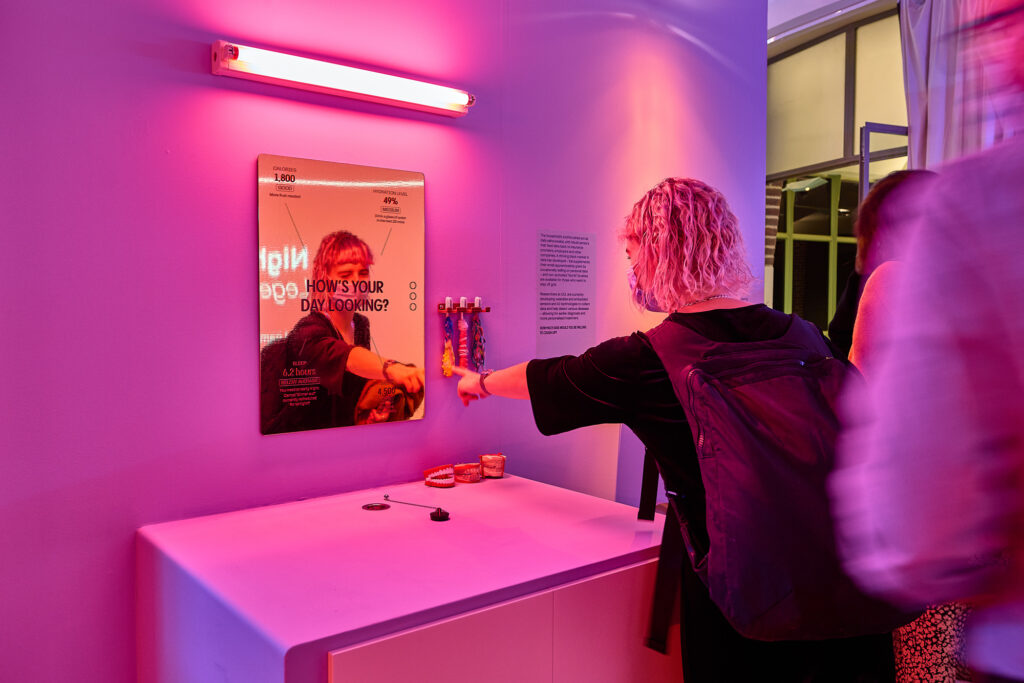
Image: courtesy of The Liminal Space
Our joint approach brings together:
- AI-driven horizon scanning & expert analysis to map the drivers of change shaping your organisational future – to test, enhance or build your central strategic vision.
- Co-created scenarios that explore probable, possible, and provocative futures and what these futures could mean for your wider stakeholder community.
- Immersive installations & events that bring those futures to life, capturing employee feedback and ideas to inform strategic planning.
The outcome: a vision of the future that feels real, inclusive, and actionable – aligning senior leaders, energising employees, and building organisational readiness.
And increasingly, these approaches can extend beyond employees to entire stakeholder communities – from customers and investors to business partners, suppliers and media.
In an era where disruption is the norm, strategy must move beyond the boardroom. Participatory Foresight ensures that visions of the future are not only set by leadership but shared, owned, and activated across the entire organisation.
To hear more about how we can help align your strategic vision with your stakeholder community, please get in touch!